If you’ve ever stood there with a bag of grass seed and thought, “More seed has to mean more grass,” you’re definitely not alone.
It sounds logical. It feels safe. It even seems like a quick fix for thin spots.
But tossing down giant handfuls like you’re feeding pigeons in the park usually backfires. Lawns love balance, and too much seed can send things in the wrong direction fast.
In this post, we’ll explain what happens if you put down too much grass seed, signs you used too much, and how to fix the problem.
Table of Contents
Can You Put Down Too Much Grass Seed?
Yes, put down too much grass seed, and it’s super easy to overdo it.
Seed is tiny, light, and kind of fun to spread around, so people assume heavier coverage gives them the thick, lush lawn look. Then things get bad.
Packed seed doesn’t mean a packed, healthy lawn. It just creates overcrowding. Seedlings fight for the same little slice of soil, and most don’t make it. Instead of a beautiful carpet of fresh grass, you end up with thin, weak sections that look sad and patchy.
The funny thing is that the perfect lawn comes from spacing, not piling on.
Each little seed needs its own room to grab nutrients, stretch out, and build solid roots.
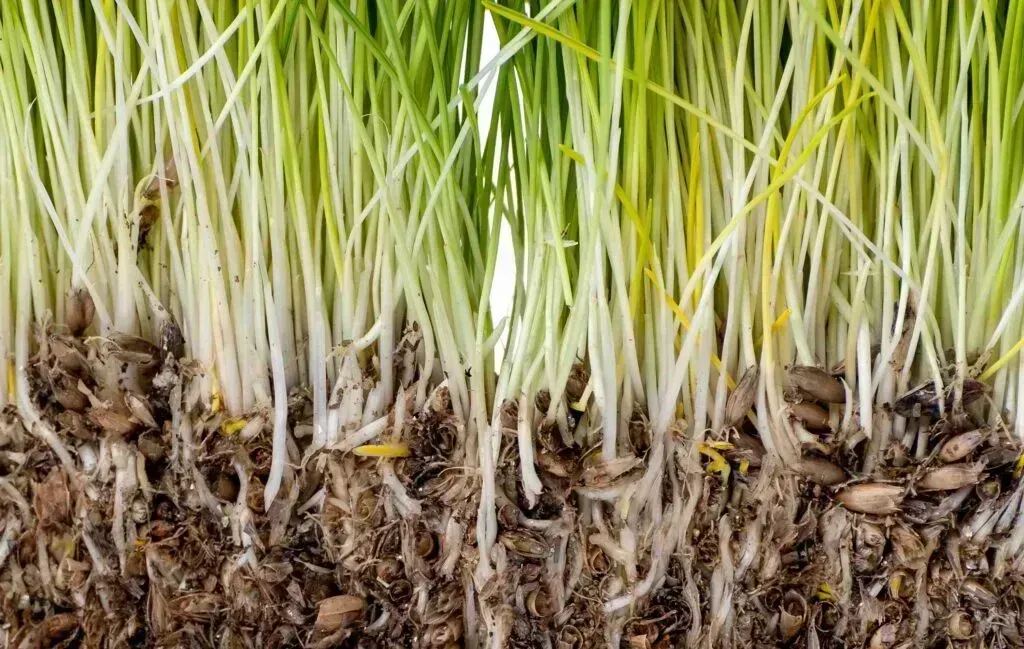
When too many seeds pile up, they choke each other out.
Also Read: Too Much Iron In Lawn
What Happens When You Use Too Much Grass Seed
The trouble starts pretty fast. You’ll notice strange patterns, slow growth, and even damp, clumpy spots that never seem to dry out.
Here are the biggest issues that show up with an overloaded lawn:
#1 Seedlings Compete
When too many seeds land in the same spot, the sprouts all rush to grab the same tiny bit of water, light, and nutrients. They crowd each other before they even get going.
You end up with dozens of seedlings tangled together, all trying to survive in a space made for maybe three of them.
Instead of filling out nicely, they get stressed, stall out, and struggle to form strong roots.
The whole section ends up looking uneven and tired because everything is fighting for the same resources.
#2 Grass Grows Thin And Weak
Crowded seedlings grow skinny, pale, and flimsy. They don’t have enough space to push down deep roots, so they stay surface-level and fragile.
A strong lawn needs density, but it also needs structure. Overcrowding kills that structure.
Instead of a lush-looking yard, you get grass that leans, bends, or breaks at the first sign of heat or foot traffic.
It basically becomes a lawn that looks like it skipped leg day for the entire year.
Also Read: Dark Green Patches In Lawn
#3 Higher Risk Of Mold, Rot, And Disease
Overcrowded seed traps moisture. All that moisture sits between the seeds and creates a little humid pocket that fungi love. Mold can start forming before the seeds even sprout.
Once the seedlings appear, rot can spread quickly through the packed roots.
And when one seedling gets hit with a fungal issue, the rest pick it up fast because they’re all jammed together.
The lawn stays damp longer than it should, and that only increases the risk of infection.
#4 Most Seedlings Die Off Before Maturing
Even though you might see a lot of sprouts at first, most don’t make it to full-grown grass.
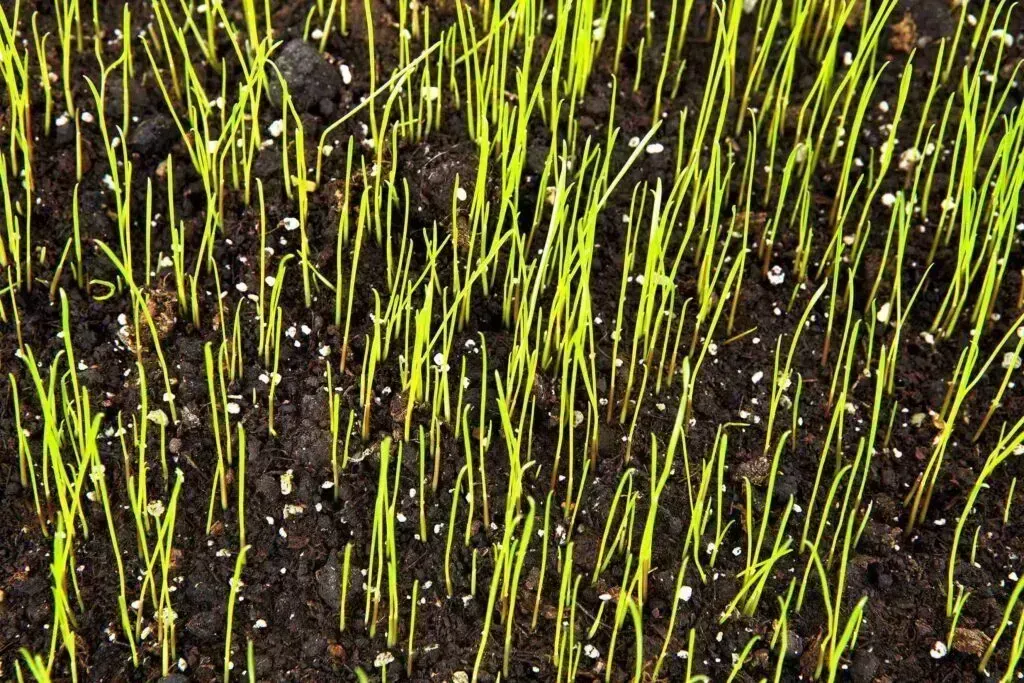
There’s just not enough space for that many seedlings to survive. The roots collide, the leaves overlap, and the strongest seedlings choke out the others.
The few survivors still end up weaker because they grew up in a high-stress crowd.
You lose most of the seed you put down, and the end result is usually thin instead of full.
Signs You Used Too Much Grass Seed
If you’re walking around your yard staring at the new growth, a few signs might clue you in that you overdid it.
The most obvious is clumping. You’ll see little matted piles that look like someone dumped seed and didn’t rake it in enough. Another sign is super slow germination.
Also Read: Alternatives To Straw For Grass Seed
You might also notice weak-looking blades that flop over or turn yellow.
And if there are damp areas that stay wet long after watering, that’s a big hint. Packed seed traps moisture like a wet sponge.
Here’s a quick list to make it easier:
- Patchy, clumpy areas that don’t blend in
- Thin, stringy new growth
- Yellow or pale sprouts
- Damp, matted spots that take forever to dry
The Right Amount Of Grass Seed To Use
Each bag of seed has a recommended rate printed on the back, and it’s a good place to start.
The suggested amount isn’t random. It’s based on how much space each seed needs to grow strong roots. If you’re seeding a brand-new lawn, you’ll use more than if you’re just overseeding.
But you still want balance.
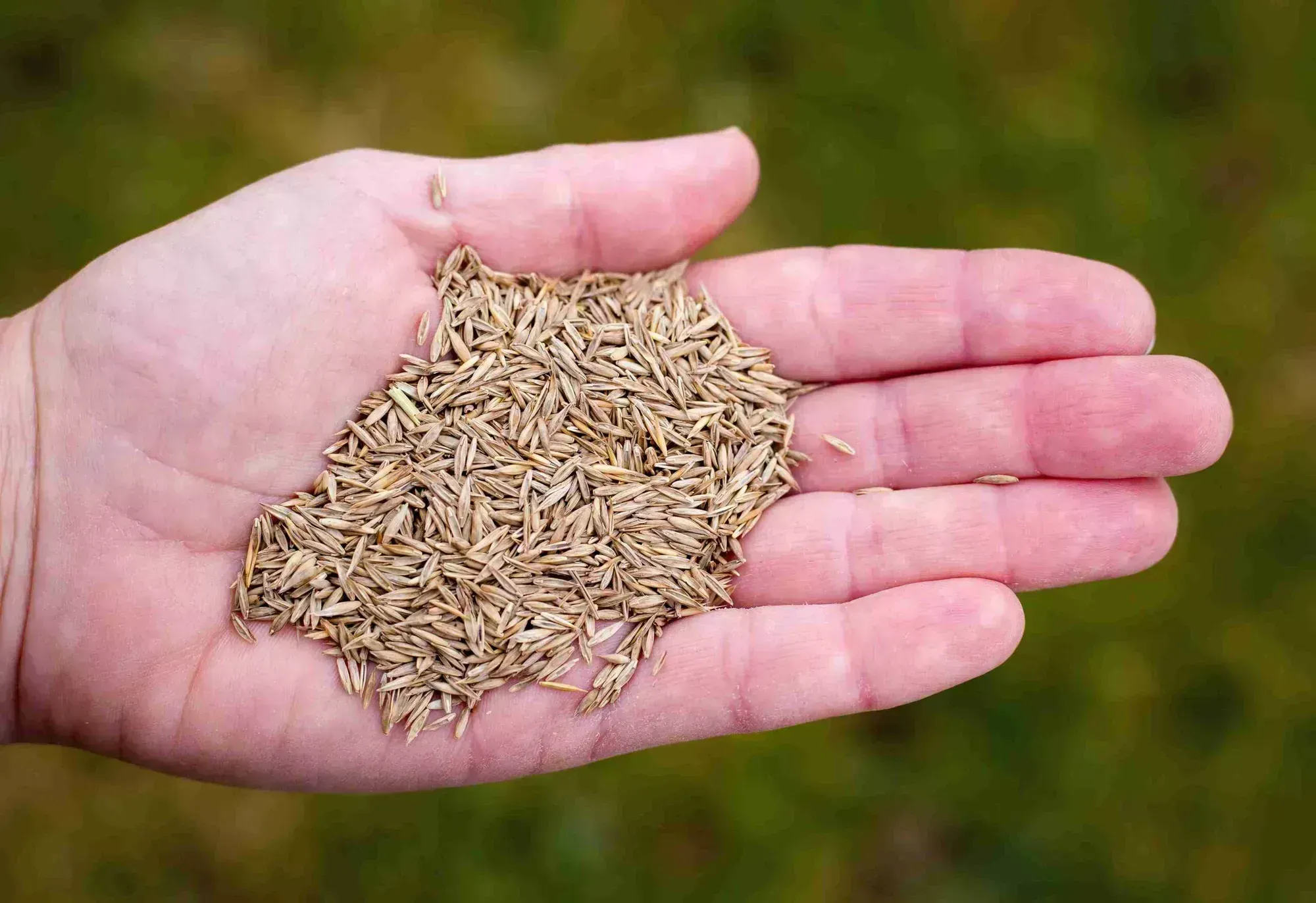
Spread your seed so it lightly dusts the soil. You should still see soil between the seeds. If you can’t see the ground at all, you went too heavy.
Using a spreader helps keep things even and stops you from dumping too much in certain areas.
How To Fix An Overseeded Lawn
If you think you went heavy with seed, don’t worry. Overseeding isn’t a disaster. It just needs a quick reset so the seedlings finally get some breathing room.
Here’s how to turn a packed, messy patch into a healthier one:
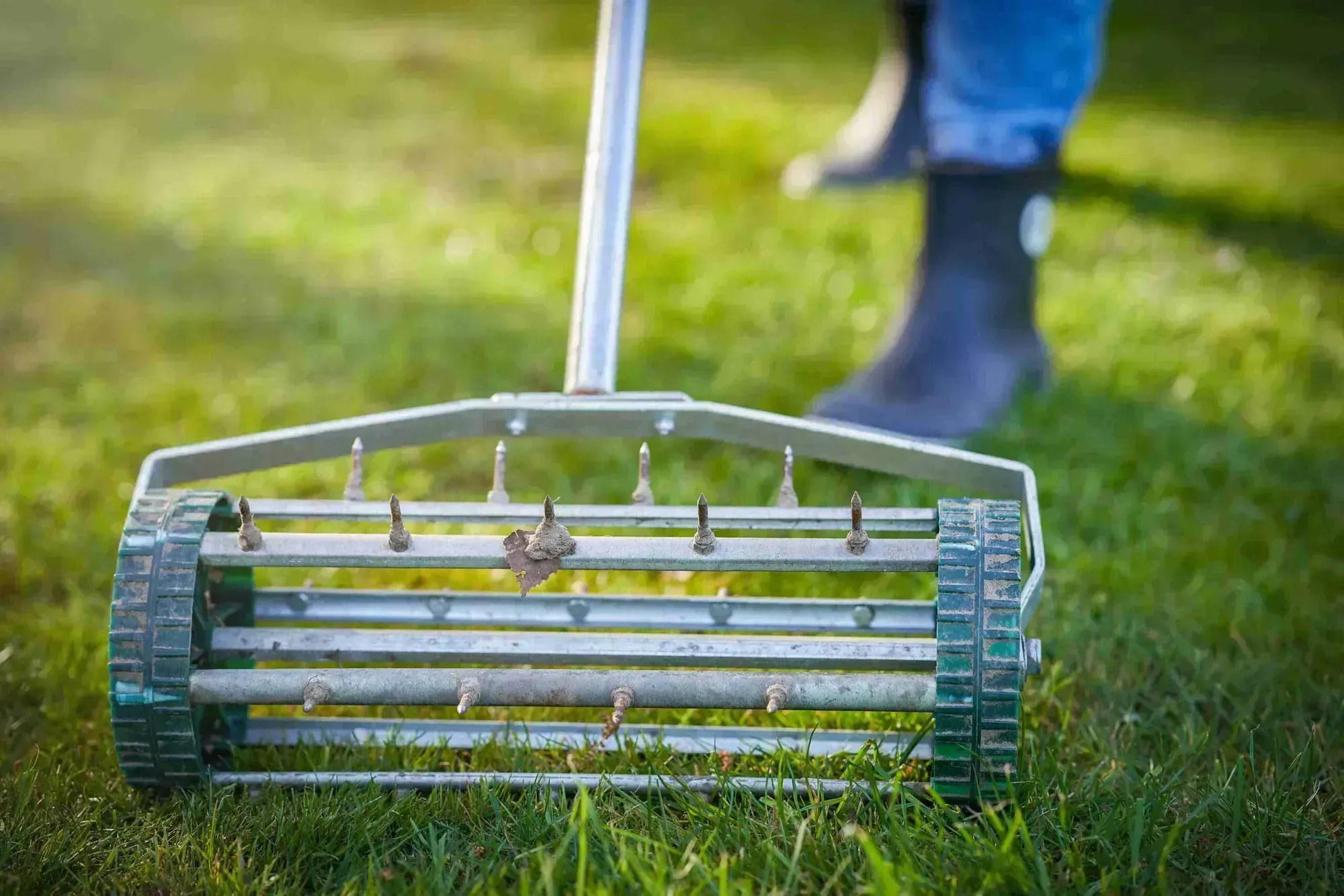
- Rake the area lightly to spread out any thick seed piles
- Break up clumps so the sprouts aren’t sitting on top of each other
- Water gently and consistently without soaking the lawn
- Thin out crowded seedlings once they get a little height
- Add a small amount of starter fertilizer if the soil looks tired
Once things even out, your lawn will start looking healthier. It might take a few weeks, but it’s a simple process.
Bottom Line
Too much grass seed creates way more problems than it solves.
Lawns thrive with space, airflow, and balance. When you overload an area with seed, you get weak growth, higher disease risk, and a whole lot of waste.
The upside is that it’s completely fixable, and once you dial in the right amount, your lawn gets stronger and easier to maintain.
If you ever feel unsure, go lighter instead of heavier. Grass is tough. It fills in over time. A gentle, even layer of seed always beats a thick pile, and your lawn ends up looking way better.